
Blog
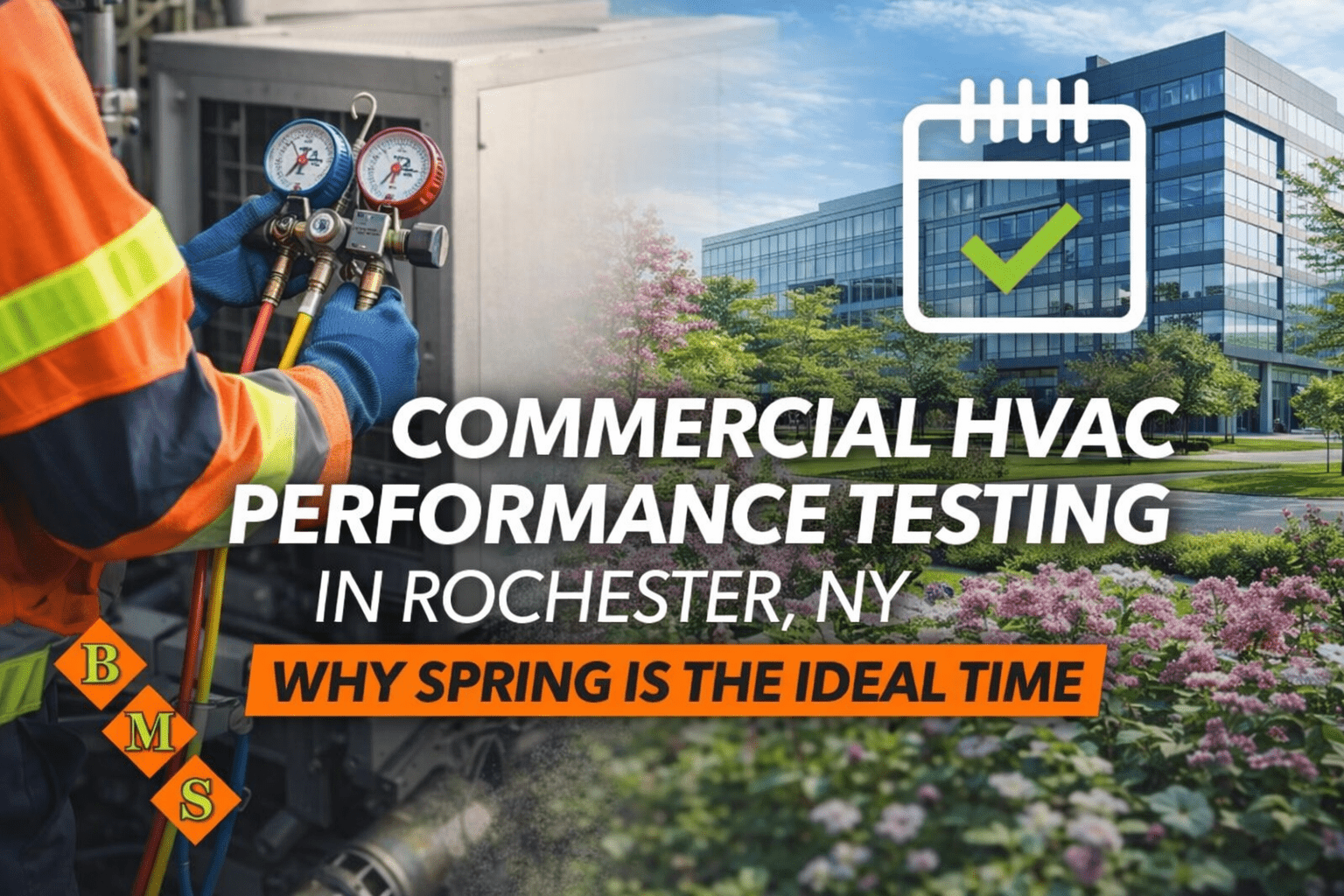
Commercial HVAC Performance Testing in Rochester, NY: Why Spring Is the Ideal Time
In Rochester, NY, commercial HVAC systems work hard for much of the year. Long heating seasons, humid summers, and sharp seasonal transitions demand consistent performance from rooftop units, boilers, air handlers, and ventilation systems.
By the time spring arrives, most commercial HVAC systems have just completed months of sustained winter operation. That makes April and May more than just a seasonal change — it creates a strategic window for evaluation.
Commercial HVAC performance testing in the spring allows facility managers to assess how systems handled winter demand and prepare for summer cooling loads before temperatures spike.
Why Spring Is the Ideal Time for Commercial HVAC Testing
Spring represents a rare overlap period. Heating demand decreases, but cooling demand has not yet peaked. Systems are still accessible, and scheduling is typically more flexible than during mid-summer emergencies.
Testing HVAC performance in this window provides several advantages:
- Identification of winter-related wear and strain
- Early detection of airflow or zoning imbalances
- Verification of equipment efficiency before cooling season
- Reduced risk of mid-summer breakdowns
- Better capital planning opportunities
In Rochester’s commercial buildings, proactive spring testing often separates stable facilities from reactive ones.
What Commercial HVAC Performance Testing Includes
Performance testing is more than a basic inspection. It evaluates how systems are functioning under operational conditions and identifies areas where efficiency or reliability may be declining.
1. Airflow and Distribution Analysis
Uneven temperatures across office suites, classrooms, or industrial spaces often indicate airflow imbalance. Spring testing typically evaluates:
- Supply and return airflow rates
- Duct integrity
- Damper positioning
- Zone consistency
Balanced airflow supports comfort, indoor air quality, and energy efficiency.
2. Equipment Efficiency Assessment
After winter, heating systems may show signs of reduced efficiency. Rooftop units and air handlers can also accumulate debris, wear, or calibration issues.
Performance testing often reviews:
- Combustion efficiency (for applicable systems)
- Electrical draw and motor performance
- Thermostat accuracy
- Refrigerant levels and pressure balance
Identifying declining efficiency early prevents unnecessary energy waste during peak cooling months.
3. Mechanical Component Evaluation
Extended winter use can strain mechanical components such as:
- Circulation pumps
- Blower motors
- Control boards
- Belts and bearings
Spring testing helps detect vibration irregularities, wear patterns, and early failure indicators before they escalate into emergency calls.
4. Ventilation and Indoor Air Quality Review
Commercial buildings depend on proper ventilation for occupant comfort and health. Filters, dampers, and fresh air intake systems require evaluation after months of heavy heating use.
Spring HVAC performance testing should confirm:
- Filter condition and replacement schedules
- Outdoor air intake function
- Proper ventilation rates
- Humidity control readiness
Indoor air quality directly impacts employee productivity and tenant satisfaction.
Rochester’s Climate and HVAC System Stress
Western New York’s freeze-thaw cycles and extended cold temperatures create cumulative stress on commercial HVAC systems. Components expand and contract repeatedly. Snow and ice can restrict rooftop airflow. Heating systems often operate continuously for months.
By spring, even well-maintained systems benefit from structured evaluation.
Commercial HVAC service in Rochester, NY must account for these environmental pressures. Performance testing provides visibility into how systems handled winter and how prepared they are for summer.
The Risk of Skipping Spring Testing
When performance testing is delayed until summer, facility managers often encounter issues at the worst possible time.
Common consequences include:
- Emergency service during peak heat
- Tenant complaints
- Employee discomfort
- Higher repair costs due to urgency
- Disrupted operations
Spring provides a lower-risk window to address potential problems calmly and strategically.
Performance Testing vs. Routine Maintenance
Routine maintenance focuses on cleaning, replacing filters, and verifying basic system operation. Performance testing goes further by analyzing how systems are functioning relative to design expectations.
For large commercial properties, performance testing helps answer important questions:
- Is the system delivering consistent output across zones?
- Are energy costs aligned with equipment age?
- Are components nearing end-of-life?
- Does the building require phased upgrades?
These insights support long-term capital planning rather than reactive spending.
Energy Efficiency and Cost Control
Energy represents one of the largest operating expenses in commercial facilities. Even small inefficiencies multiply across months of cooling demand.
Spring HVAC performance testing can uncover:
- Overworking compressors
- Airflow leaks
- Improper thermostat calibration
- Equipment cycling irregularities
Correcting these issues early stabilizes energy consumption before summer load intensifies.
Supporting Business Continuity Through Proactive Testing
Commercial HVAC systems influence more than comfort. They affect:
- Employee productivity
- Tenant retention
- Equipment reliability in temperature-sensitive environments
- Overall building reputation
In Rochester’s competitive commercial environment, stable building performance supports operational confidence.
Commercial HVAC Services in Rochester, NY
Baker Mechanical Systems provides commercial HVAC performance testing and service throughout Rochester, NY. The focus remains practical and objective — evaluating system performance, identifying early warning signs, and helping facility managers plan strategically.
Spring offers a valuable window to review system performance before cooling season begins in full.
Preparing for the Months Ahead
By the time summer arrives, HVAC systems must operate reliably without interruption. Waiting until temperatures climb places unnecessary pressure on both equipment and facility teams.
Spring performance testing ensures that commercial HVAC systems are prepared for seasonal demand and aligned with long-term building performance goals.
If your facility is transitioning from heating season and preparing for summer operations, contact Baker Mechanical Systems to schedule commercial HVAC performance testing in Rochester, NY.
Reliable infrastructure begins with visibility — and proactive evaluation protects stability year-round.
‹ Back