
Blog
What Late Winter Reveals About Commercial Plumbing and HVAC Systems in Rochester, NY
Late winter has a way of telling the truth.
After months of nonstop heating, heavy snow, freezing temperatures, and constant system demand, commercial buildings throughout Rochester begin to show where attention is needed. It happens every year — not because systems are poorly designed, but because Western New York winters place real stress on infrastructure.
For facility managers and commercial property owners, this period between deep winter and early spring is one of the most important times to assess plumbing, HVAC, and mechanical performance.
Why Late Winter Is a Critical Inspection Window
By late February and early March, building systems have been operating under sustained demand for months. Heating systems have worked continuously. Water lines have endured repeated freeze-thaw cycles. Snow accumulation and melt have tested drainage systems.
Small issues that were invisible in November or December often begin to surface.
In Rochester, NY, this is when experienced mechanical teams start seeing patterns across office buildings, industrial facilities, schools, and commercial properties.
Common Plumbing Issues That Surface in Late Winter
1. Small Leaks That Went Unnoticed
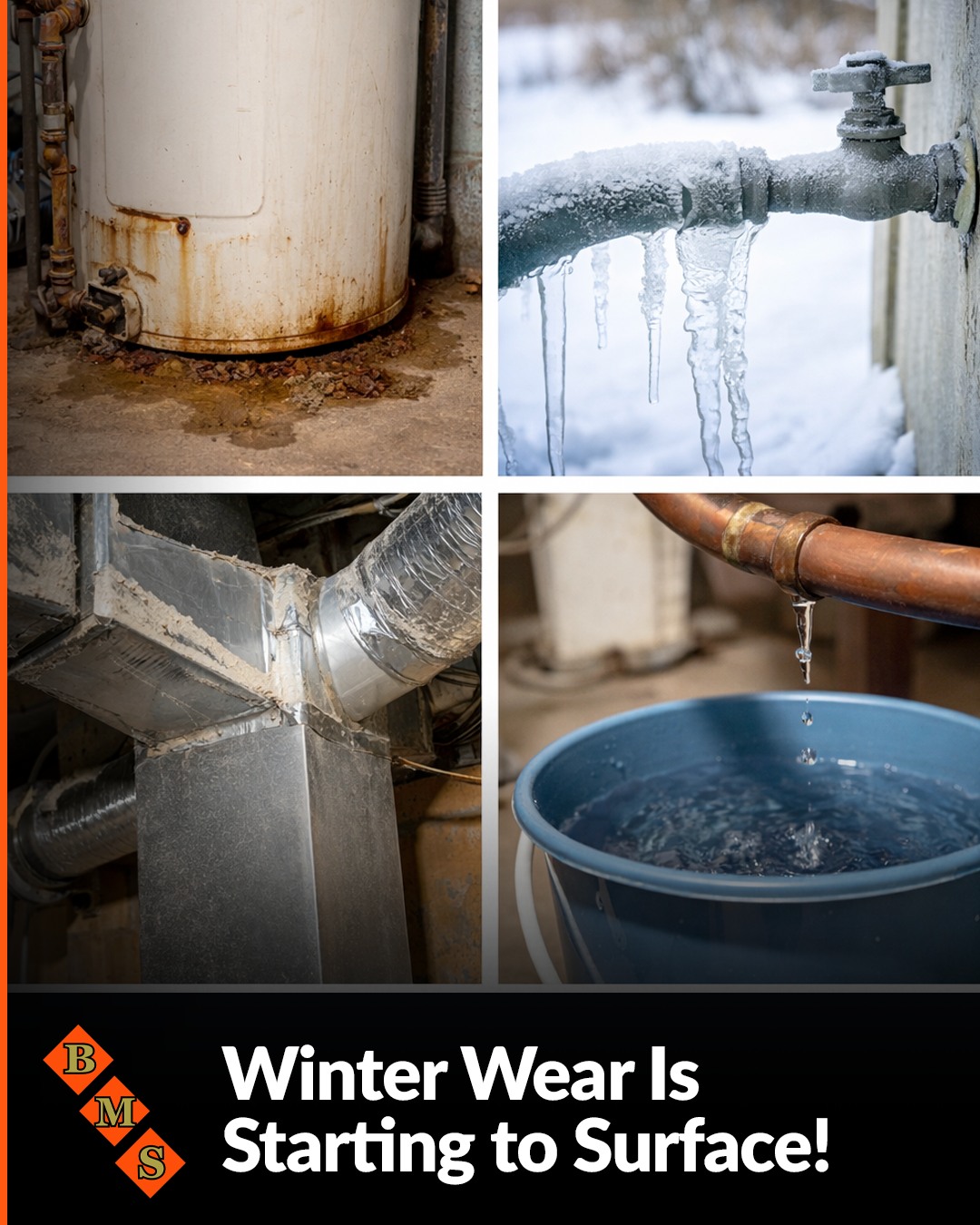
Minor leaks often develop slowly during peak winter usage. A small fitting under pressure may hold — until months of expansion and contraction weaken it further.
Facility teams frequently discover:
- Drips at mechanical room fittings
- Supply line seepage
- Valve packing failures
- Minor corrosion points accelerating
These may appear small, but left unaddressed, they can escalate into water damage, mold concerns, or unplanned downtime.
2. Aging Water Heaters and Mechanical Equipment Under Strain
Commercial water heaters and boilers work hardest during winter. Late winter often reveals:
- Inconsistent performance
- Slow recovery times
- Pressure irregularities
- Visible rust or corrosion at tank bases
These signs are not dramatic failures — they are signals. Systems communicating that they’ve been under sustained load.
3. Frozen or Stressed Exterior Lines
Exterior hose bibs, exposed supply lines, and underground services take repeated hits from temperature swings. As late winter thaw begins, hidden freeze damage becomes visible.
Common indicators include:
- Reduced water pressure
- Cracking at exterior connections
- Wet soil near foundation lines
- Slow-draining exterior systems
Freeze-thaw cycles are particularly impactful in Rochester due to fluctuating daytime and nighttime temperatures.
HVAC and Ventilation Issues That Show Up Late in the Season
Heating systems running continuously for months create wear that often goes unnoticed until performance dips.
1. Ventilation Imbalances
Over time, airflow inconsistencies develop. Filters clog. Dampers shift. Components loosen under vibration.
In commercial buildings, this often results in:
- Hot and cold zones across office spaces
- Employee comfort complaints
- Reduced indoor air quality
- System inefficiencies
Comfort impacts productivity. Late winter is when those comfort inconsistencies tend to become most noticeable.
2. Mechanical Room Wear
Mechanical rooms tell a story. After sustained winter use, piping insulation may show deterioration, joints may reveal early corrosion, and older valves may begin to show signs of fatigue.
These are not emergencies — they are early warnings.
Drainage and Water Intrusion Risks During Thaw
As snow begins to melt, drainage systems are tested rapidly. Commercial properties in Rochester often face:
- Clogged storm drains
- Catch basin backups
- Foundation seepage
- Parking lot runoff issues
What looked stable under frozen conditions can shift quickly once melt begins.
This is why late winter inspections are particularly valuable before full spring rainfall arrives.
The Cost of Waiting Until Failure
In commercial environments, waiting until a plumbing or HVAC issue becomes urgent can carry significant cost:
- Operational downtime
- Emergency repair premiums
- Water damage remediation
- Tenant dissatisfaction
- Insurance claims
Most late-winter findings are manageable when caught early. The goal is not to overhaul systems unnecessarily — it is to understand what they are communicating.
Preventive Maintenance: A Strategic Advantage for Rochester Facilities
Commercial plumbing and HVAC systems are foundational to business continuity. They influence employee comfort, safety, and overall building performance.
Late winter provides an ideal checkpoint for:
- Reviewing heating system performance
- Inspecting exposed plumbing and mechanical connections
- Evaluating drainage function before spring storms
- Planning phased upgrades for aging infrastructure
Facilities that treat this period as a diagnostic window tend to experience fewer disruptions throughout the year.
Commercial Plumbing and HVAC in Rochester, NY: Built for Durability — But Not Immune to Winter
Rochester’s climate demands resilient mechanical systems. But even well-built infrastructure requires periodic evaluation.
Baker Mechanical Systems works with commercial and industrial facilities throughout Rochester, NY to assess plumbing, HVAC, and fire protection systems after peak winter demand.
The approach is straightforward: identify early indicators, prioritize necessary adjustments, and help building owners make informed decisions.
Late Winter Is About Visibility
None of these issues are unusual. They are part of operating commercial buildings in Western New York.
The difference between stability and disruption is visibility.
If you manage or own a commercial property and have noticed small issues surfacing as winter winds down, it may be time for a closer evaluation.
To discuss your building’s plumbing or HVAC systems, contact Baker Mechanical Systems to schedule a conversation.
When infrastructure is maintained proactively, businesses can focus on what they do best — without distraction.
‹ Back